
Driving and riding in Bali during the rainy season require extra care, especially when heavy rain affects visibility, tyre grip, and traffic conditions. Although you can still travel around the island during this period, wet roads make it important to adjust your speed, maintain a safe distance, and pay closer attention to other road users.
Whether you plan to rent a scooter, ride a motorcycle, or travel by car, the right preparation can make a significant difference. Check your vehicle before departure, understand how to respond when rain becomes heavier, and know when it is safer to stop rather than continue your journey.
Is It Safe to Drive or Ride in Bali During Rainy Season?
Yes, driving or riding in Bali during the rainy season is possible, but you need to take extra precautions. Rain can reduce tyre grip, limit visibility, increase braking distances, and make it harder to control your vehicle.
Your safety largely depends on rainfall intensity, road conditions, vehicle condition, and your driving experience.
Before setting off, keep these points in mind:
- During light rain: Reduce your speed, maintain a safe distance, and avoid sudden braking or steering.
- During heavy rain: Visibility may decrease significantly, making it harder to identify road hazards and respond to traffic.
- When riding a scooter: Be extra careful when cornering, braking, or crossing slippery road markings and metal surfaces.
- When driving a car: Use your headlights, check your windscreen wipers, and allow more distance between vehicles.
- When encountering floodwater: Avoid crossing water if its depth or movement is uncertain. It may conceal potholes, open drains, or other hazards.
- If conditions become unsafe: Stop at a suitable safe location and wait until the rain eases.
If you are unfamiliar with riding a scooter or have limited experience driving in wet conditions, consider arranging alternative transportation, such as travelling with a private driver.
The key is to adjust your driving to the weather rather than trying to maintain your usual speed or travel schedule.
What Makes Driving and Riding in Bali More Challenging During Rain?
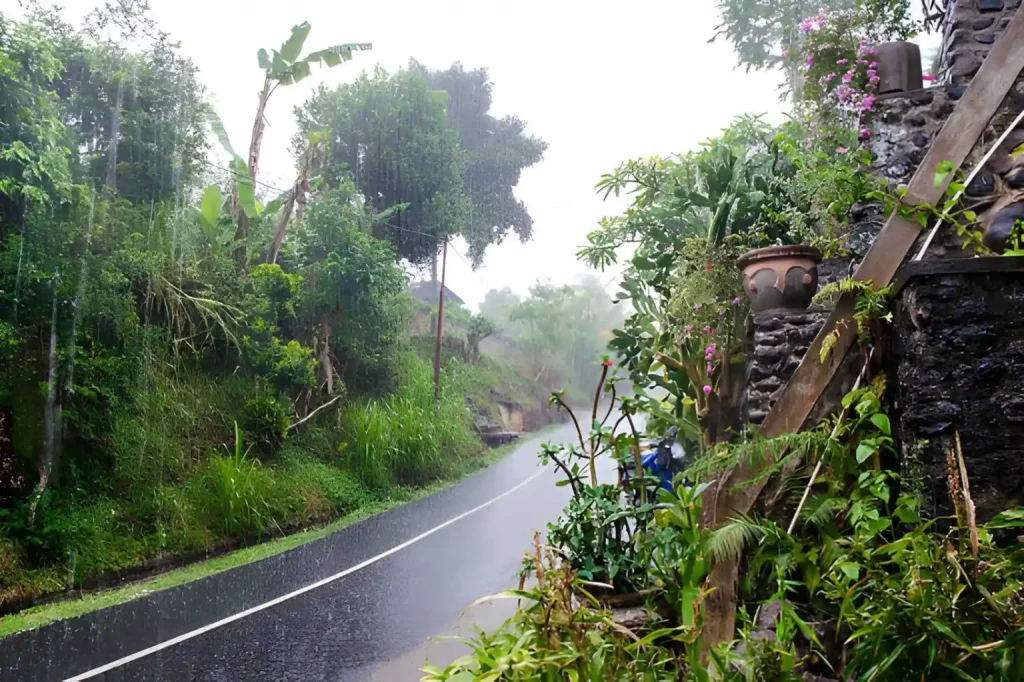
Rain affects more than the road surface. It changes how your vehicle responds and how much time you have to react to other traffic.
Here are the main factors to consider when travelling around Bali in wet weather.
1. Wet Road Surfaces and Reduced Tyre Grip
Rainwater creates a layer of moisture between your tyres and the road surface, which can reduce traction. This makes it easier for a vehicle to skid when braking, accelerating, or turning too quickly.
Some surfaces require extra attention, including painted road markings, metal drainage covers, smooth concrete, and tiled areas near buildings or entrances. These can become particularly slippery when wet.
For scooter and motorcycle riders, the risk is more noticeable when leaning into a corner or crossing a slippery surface. Avoid sudden movements and keep your motorcycle as upright as possible when passing over potentially slippery sections.
For car drivers, reduce your speed and avoid sharp steering inputs. If your tyres lose contact with the road because of standing water, the vehicle may experience aquaplaning, making steering and braking less effective.
2. Reduced Visibility and Longer Stopping Distances
Heavy rain can make it harder to see vehicles, pedestrians, road signs, and hazards ahead. Water spray from other vehicles may reduce visibility even further, particularly when you are travelling behind larger cars or trucks.
Wet surfaces also affect braking performance. The UK Highway Code warns that stopping distances in wet weather can be at least twice those required on dry roads. Although the exact distance depends on vehicle condition, speed, tyres, and road surface, the principle is relevant to driving in Bali: you need more room to slow down safely.
Avoid following other vehicles too closely. Give yourself enough space to respond if the vehicle ahead suddenly brakes or encounters an obstacle.
3. Sudden Downpours and Changing Weather
Rainfall in Bali can vary between locations. You may leave your accommodation under cloudy skies and encounter heavier rain while travelling to another part of the island.
A route that feels manageable at the beginning of your journey may become more difficult if rainfall increases. This is why checking the weather only once in the morning may not be enough for a full day of travel.
Pay attention to changing conditions along your route. If rain becomes heavier, reduce your speed and reconsider whether it is still sensible to continue.
4. Slippery Road Markings and Unexpected Hazards
Road markings, metal surfaces, leaves, loose gravel, and debris can become more hazardous when wet. Potholes may also be harder to identify when they are covered by rainwater.
Do not assume that a puddle is shallow or that the road beneath it is in good condition. Slow down when approaching standing water and avoid sudden steering movements to get around an obstacle.
You may also want to read this: Bali Road Conditions in Rainy Season: Traffic, Roads & Tips
How to Ride a Scooter or Motorcycle Safely in Bali During Rain
Scooters are a common way to explore Bali, but riding one in wet weather requires more control and preparation. If you are planning to rent a scooter, make sure you are comfortable operating it before entering busy traffic.
1. Check Your Scooter Before Setting Off
Before starting your journey, check the basic components that affect safety and handling.
Pay attention to:
- Tyres: Check the tread and overall condition. Worn tyres provide less grip, especially on wet roads.
- Brakes: Make sure both front and rear brakes respond properly.
- Headlights and indicators: Confirm that other road users can see your scooter when visibility is reduced.
- Mirrors: Adjust them so you can monitor traffic behind you.
- Horn: Make sure it works properly for situations where you need to alert other road users.
If you notice damaged tyres, weak brakes, or faulty lights, do not ignore the problem. Ask the rental provider to check or replace the scooter before using it.
2. Wear the Right Helmet and Rain Gear
A properly fitted helmet is essential whenever you ride a motorcycle. Make sure the helmet is in good condition, securely fastened, and suitable for road use.
For rainy conditions, prepare a lightweight rain jacket and trousers that allow you to move freely. A two-piece rain suit is generally more practical than a loose poncho because loose fabric can interfere with movement or become caught in vehicle components.
You should also wear shoes with a good grip rather than open footwear that can easily slip when wet. Keep your phone, wallet, and other valuables in a waterproof bag.
3. Reduce Speed and Brake Smoothly
One of the most important adjustments when riding in the rain is reducing your speed. Wet roads provide less grip, so sudden braking or acceleration can make the scooter unstable.
Apply the brakes progressively rather than grabbing them abruptly. Allow more time to slow down before reaching intersections, bends, or busy areas.
Avoid sudden acceleration when moving away from a stop. Smooth throttle control helps maintain balance and reduces unnecessary wheel slip.
4. Be Careful When Cornering and Changing Lanes
Turning requires extra attention when the road is wet. Reduce your speed before entering a corner instead of braking heavily while leaning.
Keep your movements smooth and avoid leaning aggressively. Be particularly careful when crossing painted lines, metal covers, or areas with accumulated water.
Before changing lanes, check your mirrors and blind spots, then signal clearly. Rain can make it harder for other road users to notice your movements, so avoid sudden lane changes.
5. Avoid Riding Through Deep or Moving Floodwater
Never assume that a flooded section is safe simply because another motorcycle or car has passed through it.
Water can hide potholes, open drains, damaged road surfaces, or other obstacles. Moving floodwater can also affect vehicle stability and carry significant force.
If water covers the road and you cannot judge its depth or current, do not ride through it. Find a safe alternative route or wait for conditions to improve.
You may also want to read this: Best Time to Avoid Traffic in Bali: Local Travel Timing Tips for 2026
Tips for Driving a Car in Bali During Rainy Season
Travelling by car offers more protection from direct rain than riding a scooter, but it does not remove the risks associated with wet roads. Drivers still need to manage visibility, braking distance, and changing road conditions.
1. Check Tyres, Brakes, Lights, and Wipers
Before driving, make sure the vehicle is ready for wet-weather conditions.
Check the tyre tread and pressure, test the brakes, and confirm that the headlights, brake lights, and indicators work properly. Windscreen wipers should clear water effectively without leaving large areas of the glass obstructed.
Also check that the windscreen washer system works and that the windows are clean. A clear windscreen is important when rain and water spray reduce visibility.
If you are renting a car, ask the rental provider to confirm that these components are in good condition before you leave.
2. Use Headlights and Maintain Visibility
Turn on your headlights when rain reduces visibility. This helps you see the road and makes your vehicle easier for other drivers and motorcyclists to notice.
Use your windscreen wipers at a speed that matches the rainfall. Keep the windscreen clear of fog by using the vehicle’s demisting or air-conditioning settings when necessary.
Avoid using hazard lights while continuing to drive in ordinary rain. They are intended to indicate a stopped or emergency vehicle, not to replace normal driving lights.
3. Increase Your Following Distance
Wet roads require more time and space to stop. Leave a larger gap between your car and the vehicle ahead, particularly when travelling behind motorcycles, buses, or trucks.
Avoid tailgating, even when traffic is moving slowly. Maintaining a safe distance gives you more time to respond if another vehicle brakes suddenly or encounters a hazard.
Reduce your speed before reaching bends and intersections. Braking and steering should be smooth, especially when the road surface is visibly wet.
4. Avoid Sudden Braking and Steering
Sudden movements can cause a vehicle to lose traction. Apply the brakes gradually, steer smoothly, and avoid accelerating sharply when turning or moving through standing water.
If you feel the vehicle begin to slide or lose grip, avoid making aggressive corrections. Ease off the accelerator and focus on regaining control without sudden steering or braking inputs.
5. Never Drive Through Unsafe Floodwater
Flooded roads can be difficult to assess from inside a vehicle. Water may conceal potholes, open drains, damaged surfaces, or other hazards.
Do not drive through moving water or floodwater of uncertain depth. Even if another vehicle has passed, that does not mean your car can safely follow.
Turn around when possible and find a safer route. If the road is blocked or conditions are dangerous, wait for local authorities or reliable information before proceeding.
You may also want to read this: Driving in Bali: Rules, Road Conditions & Tourist Guide
When Should You Stop Driving or Riding in Bali?
Knowing when to stop is just as important as knowing how to drive or ride in the rain. Continuing a journey when visibility or vehicle control is seriously affected can put you and other road users at risk.
Consider stopping or postponing your journey in these situations:
1. Heavy Rain Makes It Difficult to See the Road
If rainfall becomes so intense that you cannot clearly see the road ahead, do not force yourself to continue.
For motorcyclists, find a safe place away from moving traffic and wait for visibility to improve. Car drivers should slow down and stop in a suitable safe location if continuing is no longer safe.
Avoid stopping in the middle of the road, on narrow shoulders, or beneath trees that may be affected by strong winds.
2. Floodwater Covers Your Route
If you encounter floodwater that hides the road surface or appears to be moving quickly, do not attempt to cross it.
Find another route if one is available. If there is no safe alternative, wait until conditions improve and follow local instructions.
3. Strong Winds or Lightning Make Travel Unsafe
Rain may be accompanied by strong gusts, lightning, or falling branches. These conditions can create additional hazards, particularly for motorcyclists.
Avoid exposed routes and areas with unstable trees, construction materials, or large roadside structures when strong winds are present.
If thunderstorms become intense, stop at a suitable sheltered location and wait for conditions to improve.
4. Your Vehicle No Longer Feels Safe to Operate
If your brakes feel weak, your tyres lose grip, your windscreen wipers stop working, or your motorcycle becomes difficult to control, stop somewhere safe.
Do not continue simply because your destination is close. Arrange assistance or contact your rental provider if the vehicle requires inspection or repair.
Should You Rent a Scooter or Use a Private Driver During Rainy Season?
Both options can work for travelling around Bali, but the right choice depends on your riding experience, destinations, and the weather conditions during your trip.
When Renting a Scooter May Suit Your Trip
A scooter can be practical for short journeys if you already have motorcycle riding experience and feel comfortable handling wet roads.
It may suit travellers who:
- Have a valid licence and the appropriate international driving documentation where required.
- Are confident controlling a motorcycle in changing weather.
- Plan to travel short distances rather than spend hours riding.
- Can adjust their schedule when heavy rain develops.
However, if you are unfamiliar with motorcycles or have never ridden in wet conditions, the rainy season is not the ideal time to learn in busy Bali traffic.
When a Private Driver Is a More Practical Choice
A private driver can be a more comfortable option if you want to avoid riding a scooter in the rain or managing an unfamiliar vehicle.
This arrangement can be particularly useful when:
- You are travelling with children, older family members, or several passengers.
- Your itinerary includes multiple destinations in different parts of Bali.
- You prefer not to ride a motorcycle in heavy rain.
- You want transport arranged around your pickup time and travel schedule.
- You need a more convenient way to travel between your accommodation, attractions, and restaurants.
A private driver does not eliminate weather-related delays or road risks. However, it allows you to focus on your trip without having to operate a vehicle yourself.
How to Plan Your Bali Journey During Rainy Season
A little preparation can help you avoid unnecessary stress when travelling around Bali during the wet season.
1. Check Local Weather Forecasts Before Departure
Check the latest forecast and weather warnings from BMKG before leaving your accommodation. Since rainfall can vary between areas, pay attention to the locations along your planned route rather than relying only on a general forecast for Bali.
For longer journeys, check for updates again before departure and adjust your plans if severe weather is expected.
2. Allow Extra Time Between Destinations
Do not plan your itinerary around the travel time you would expect on a dry day. Rain can reduce traffic speed, affect visibility, and create temporary delays.
Leave extra time between activities, especially if you need to reach a scheduled tour, restaurant booking, or airport transfer.
3. Keep Your Itinerary Flexible
Avoid arranging too many destinations in a single day during periods of uncertain weather. If heavy rain develops, you may need to change the order of your activities or postpone an outdoor visit.
Having alternative indoor activities or flexible departure times can make your trip easier to manage.
4. Prepare an Alternative Transport Arrangement
If you are planning to rent a scooter, consider what you will do if the weather becomes too difficult for riding.
You may want to arrange a private car or driver for longer journeys, airport transfers, or days when heavy rain is expected. Having another option means you do not have to continue riding simply because you have already rented a motorcycle.
Travel Around Bali More Comfortably with a Private Driver
Avoid the challenges of riding a scooter in the rain. With Gede Bali Transport, you can arrange a private driver to take you between destinations, pick you up from your accommodation, and travel according to your schedule.
Whether you need an airport transfer, transportation between different areas of Bali, or a private driver for a full day of sightseeing, we can help arrange transportation based on your itinerary.
Planning your Bali trip during the rainy season? Choose how you’d like to get started:
Frequently Asked Questions About Driving and Riding in Bali During Rainy Season
Driving can become more challenging when heavy rain reduces visibility and tyre grip. However, you can still travel by car if the vehicle is in good condition and you adjust your speed and following distance to the weather.
Riding a scooter in light rain may be manageable for experienced riders, but wet roads increase the risk of slipping and losing control. Reduce your speed, avoid sudden braking, wear a properly fitted helmet, and stop if rainfall becomes too heavy.
Tourists with suitable riding experience and valid licences may still choose to rent a scooter. However, if you are inexperienced, uncomfortable riding in wet conditions, or planning long journeys, using a car with a private driver may be a more suitable option.
Wear a properly fitted helmet, a two-piece waterproof rain suit, and shoes with good grip. Avoid loose clothing that could interfere with vehicle control, and keep your belongings in a waterproof bag.
Do not ride or drive through floodwater if you cannot assess its depth or movement. Water can hide potholes, open drains, and other hazards. Find a safer route or wait until the road is safe to pass.
Yes. Rain does not mean you have to cancel your Bali holiday. You can still enjoy the island by checking local forecasts, keeping your itinerary flexible, and choosing transport that suits the weather and your travel plans.


